



Ammonite fossil
This is the fossil of ammonites. Ammonites are an extinct marine cephalopod mollusk related to modern octopus, squid and nautilus. The most notable feature of ammonites is its flat-spun outer shell with tight spiral curls. This shell is not only their shelter, but also controls buoyancy by adjusting the internal air chamber like modern nautilus. They first appeared in the Triassic period about 0.24 billion years ago and became extinct with the dinosaurs at the end of the Cretaceous period (about 66 million years ago). The ammonite evolves extremely quickly and is widely distributed, so it is a very important "standard fossil" in geology ".

Cretaceous chrysanthemum fossils
The ammonites are an extinct marine mollusk belonging to the cephalopod family. They lived on Earth during the Mesozoic period, about 0.25 billion to 65 million years ago, and were mainly distributed in the oceans. The shape of the ammonite resembles a spiral flat disc, consisting of a series of spiral chambers. Their shells are usually made of calcareous matter and can be preserved as fossils. The size range of ammonites is large, from tiny species with only a few millimeters to giant species with a diameter of more than 2 meters.

Ammonite fossil
It is an extinct marine cephalopod mollusk, belonging to the subclass ammonites, which lived from the Devonian to the end of the Cretaceous. It is known for its unique spiral shell, which usually presents complex patterns and designs, is made of calcium carbonate, and is divided into chambers separated by thin walls called partitions. The diameter of the ammonites varies from a few centimeters to more than two meters, and the shapes are varied, from tightly coiled forms to more open and loosely coiled forms. One of the most abundant and successful sea creatures of its time, it was an active predator, catching prey with its tentacles. The rapid evolution and wide distribution of ammonite make it an important standard fossil for stratigraphic division and correlation
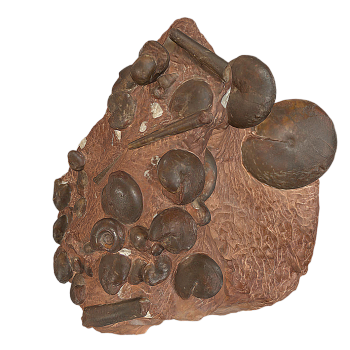
ammonite fossil
Kikushi, a collective term for cephalopods and ammonites in the phylum Mollusca, is a group of extinct marine organisms. Kikushi lived from the early Devonian to the late Cretaceous period, and its shell is often preserved in the form of fossils in the strata. The outer shell of ammonite is a single petal, consisting of three parts: the fetal shell, the gas shell, and the living room. It usually spirals around the fetal shell along a plane, with each revolution forming a spiral ring. Adult ammonite shells generally have 5 to 9 spiral rings, symmetrical on both sides, and can be straight, curved, or even irregular.

ammonite fossil
The ammonite is an extinct marine mollusk belonging to the cephalopod family. They lived on Earth during the Mesozoic period, about 0.25 billion to 65 million years ago, and were mainly distributed in the oceans. The shape of the ammonite resembles a spiral flat disc, consisting of a series of spiral chambers. Their shells are usually made of calcareous matter and can be preserved as fossils. The size range of ammonites is large, from tiny species with only a few millimeters to giant species with a diameter of more than 2 meters.

Popular Models
Honey Badger (3D animated model)
200 View
Guinea fowl (3D animated model)
169 View
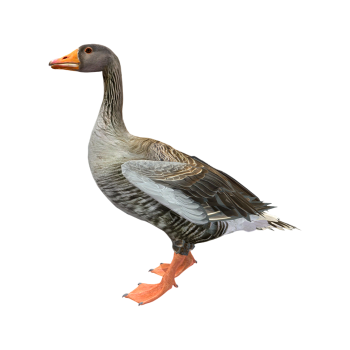
Wild Goose (3D animated model)
191 View
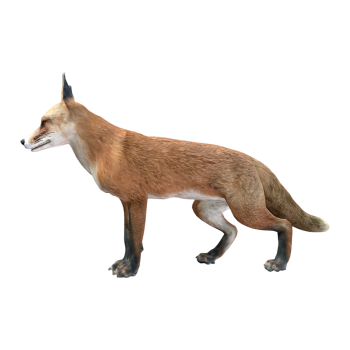
Red Fox (3D animated model)
159 View
Random Model

Quiet corner
444 View

Haima 3D model animation
1175 View

An original style tent
456 View

Japanese Sushi Boat
704 View

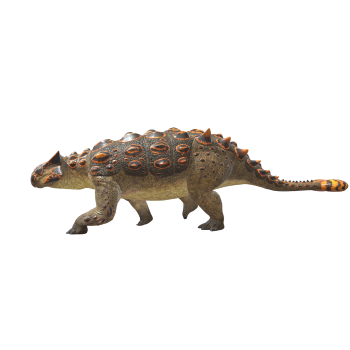
An angylosaur (3D Action Model)
163 View

The International Space Station
996 View

Holstein cow (with 3D animated model)
1064 View

Israel Makmat160mm mortars
903 View

Wooden office chair
890 View